


THE
KIDSWATCH
BLOG

My Child’s Skin Is Always Dry and Itchy. What Should I Do?
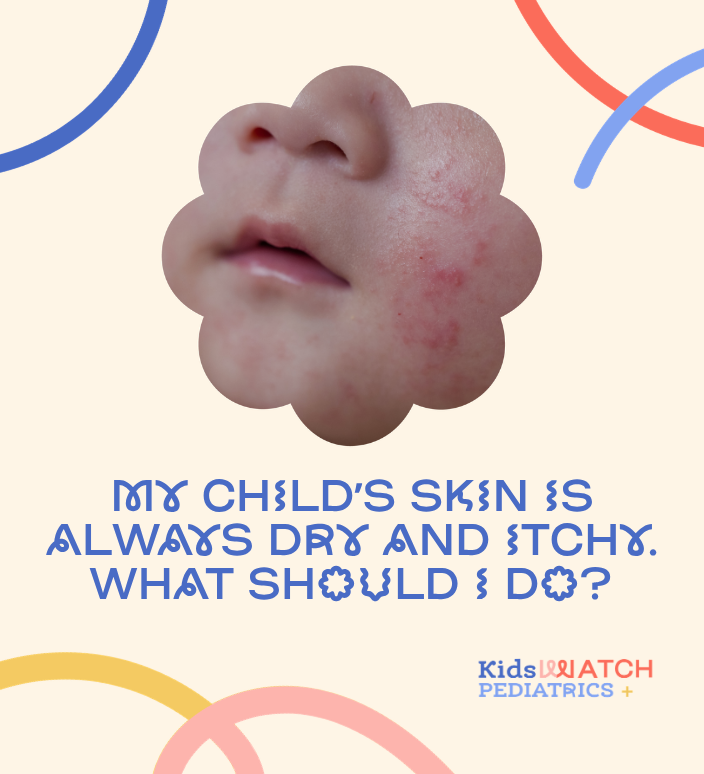
“My child’s skin is always dry and itchy. What am I supposed to do?”
It’s a question we hear from parents often, especially when the dryness keeps coming back no matter how much moisturizer they use.
Sometimes, dry skin really is just dry skin. But when it’s persistent and comes with itching, redness, rough patches, or repeated flare-ups, eczema may be one possible cause.
The good news is that there are ways to manage eczema, reduce flare-ups, and help your child feel more comfortable. The first step is understanding what may be happening with their skin.
What is eczema?
Eczema, also called atopic dermatitis, is a common inflammatory skin condition in children. It affects the skin barrier, which normally helps the skin hold onto moisture while protecting it from irritants.
When that barrier isn’t working as well as it should, the skin can lose moisture more easily and become dry, sensitive, itchy, and irritated.
For some children, eczema may appear as small patches of dry or rough skin. For others, it can cause significant redness, inflammation, and itching that comes and goes over time.
One of the biggest clues is that the problem keeps returning.
What can trigger an eczema flare?
One of the frustrating things about eczema is that there isn’t always one obvious trigger.
Heat and sweating can make one child’s skin flare, while another may react to cold, dry weather. Fragranced soaps, lotions, detergents, certain fabrics, or other products that come into contact with the skin may also contribute to irritation.
Common triggers can include:
→ Heat and sweat
→ Cold or dry air
→ Fragrances
→ Harsh soaps and cleansers
→ Certain fabrics
→ Irritating skincare or household products
Every child is different, which is why paying attention to when flare-ups happen can be helpful.
Did your child start using a new body wash? Does the itching become worse after sports? Does their skin flare during colder months?
Patterns like these can give you and your pediatrician useful clues.
What can parents do at home?
When it comes to everyday eczema care, simpler is often better.
Start with your child’s bath and skincare routine. Use lukewarm rather than hot water, since hot water can further dry and irritate the skin. Choose gentle, fragrance-free cleansers and skincare products whenever possible.
After bathing, gently pat your child’s skin dry instead of rubbing it with a towel.
Then moisturize.
Applying moisturizer while the skin is still slightly damp can help lock in moisture. And don’t wait until your child’s skin looks extremely dry. Consistent moisturizing is an important part of protecting the skin barrier, including between flare-ups.
“We moisturize every day, but it still comes back.”
This is another concern we hear from parents.
Moisturizer is an important part of eczema care, but sometimes it isn’t enough on its own.
Eczema involves inflammation, and some children may need medication to bring that inflammation under control during a flare. Depending on your child’s symptoms, age, severity, and where the eczema appears, your pediatrician may recommend a topical treatment.
Children who experience frequent flare-ups may also benefit from a maintenance plan for areas where eczema tends to return.
There isn’t one treatment plan that works for every child, so it’s important to have persistent or worsening symptoms evaluated rather than continually switching products or trying to manage severe symptoms at home.
When should you bring your child in?
Consider having your child’s skin evaluated if the dryness or itching keeps returning despite consistent home care.
You should also talk with your pediatrician if:
→ Itching is interfering with your child’s sleep or daily activities
→ The skin becomes increasingly red, swollen, warm, or painful
→ You notice oozing, drainage, or crusting
→ Your child is scratching enough to break the skin
→ Flare-ups are becoming more frequent or severe
→ Your usual skincare routine is no longer helping
→ You’re simply not sure whether what you’re seeing is eczema
Broken or irritated skin can sometimes become infected, so significant changes in how the skin looks or feels shouldn’t be ignored.
You don’t have to keep guessing what’s irritating their skin
Watching your child constantly scratch can be frustrating, especially when you feel like you’ve already tried every moisturizer on the shelf.
Eczema is manageable, but finding the right routine can take some trial and adjustment.
At KidsWatch Pediatrics, we can evaluate your child’s skin, help identify possible triggers, and create an age-appropriate treatment plan to help manage current symptoms and reduce future flare-ups.

Comments will load here
Be the first to comment