


THE
KIDSWATCH
BLOG

Why Can Asthma Get Worse in September?
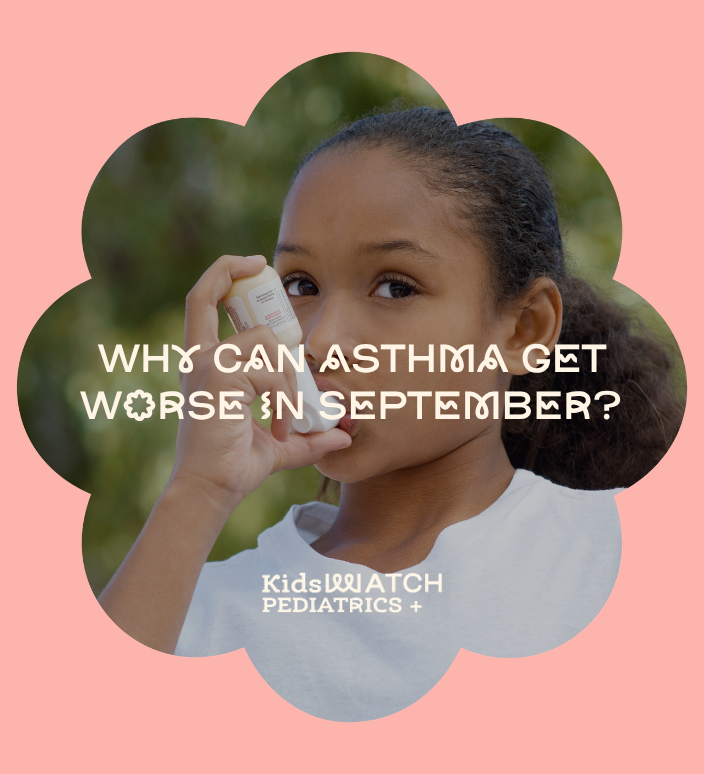
September means back to school, changing weather, fall activities, and new routines. But for families of children with asthma, it can also bring something less welcome: an increase in asthma symptoms and flare-ups.
Healthcare providers have long observed an increase in asthma exacerbations among school-aged children after they return to school in the fall. Sometimes called the “September asthma spike,” it can catch families off guard, especially when a child’s asthma seemed well controlled throughout the summer.
So why does it happen, and what can parents do to prepare?
Why Can Asthma Get Worse in September?
There usually isn’t one single cause. Instead, several triggers can arrive at the same time.
1. Kids Are Back Together at School
Returning to classrooms means children are once again spending more time around other children.
Respiratory viruses begin circulating more easily, and viral infections are a common trigger for asthma symptoms in children.
For some kids, what begins as an ordinary cold can lead to increased coughing, wheezing, chest tightness, or difficulty breathing.
2. Fall Allergies Are Picking Up
September can also mean increased exposure to seasonal allergens such as ragweed pollen and mold spores.
For children whose asthma is triggered by allergies, nasal congestion, sneezing, and itchy eyes may not be the only symptoms parents notice. Allergens can also contribute to asthma symptoms.
This is why managing your child’s allergies may be an important part of managing their asthma.
3. Routines Change After Summer
Summer schedules can look very different from the school year.
When school starts again, medication routines may change or become harder to remember during busy mornings.
If your child has a prescribed daily controller medication, following their treatment plan consistently is important even when they are feeling well. Talk with your child’s healthcare provider before making changes to prescribed asthma medications.
4. More Physical Activity Can Reveal Symptoms
Recess, PE, sports, and after-school activities can mean more running and physical activity.
Exercise is healthy and children with asthma should generally be encouraged to stay active, but physical activity can trigger symptoms in some children.
If your child regularly coughs, wheezes, develops chest tightness, or struggles to keep up during exercise, mention it to their pediatrician.
Signs Your Child’s Asthma May Not Be Well Controlled
Asthma does not always look like a dramatic asthma attack.
Sometimes the signs are more subtle.
Pay attention if your child is:
→ Coughing frequently, particularly at night
→ Waking because of coughing or breathing symptoms
→ Wheezing
→ Complaining of chest tightness
→ Getting unusually short of breath during activity
→ Avoiding activities they normally enjoy
→ Needing their prescribed quick-relief medication more frequently than usual
A persistent nighttime cough or difficulty keeping up with other children can sometimes be an important clue that asthma needs to be reassessed.
Your September Asthma Checklist
If your child has asthma, the beginning of the school year is a good time to check a few things.
Review their asthma action plan. Make sure you understand what to do when your child is doing well, when symptoms begin, and when symptoms require urgent medical attention.
Check medications and devices. Make sure prescribed medications have not expired and that inhalers, spacers, or other devices are available where your child needs them.
Check what the school needs. Depending on your child and school, the nurse may need an asthma action plan, medication authorization, or medication to keep at school.
Talk about triggers. Help older children recognize their own early symptoms and understand when they should tell a teacher, coach, school nurse, or another adult.
Schedule a check-in if needed. If symptoms have changed since your child’s last asthma visit, do not wait for a significant flare to discuss them.
When Should You Seek Care?
Contact your child’s healthcare provider if asthma symptoms are becoming more frequent, interfering with sleep or activities, or their usual treatment plan does not seem to be controlling symptoms as expected.
Severe difficulty breathing is an emergency. Seek emergency care if your child is struggling to breathe, has blue or gray lips or skin, cannot speak normally because of breathlessness, becomes unusually drowsy or confused, or has severe symptoms that are not responding to their prescribed rescue plan.
When in doubt about how to respond to your child’s symptoms, follow their individualized asthma action plan and contact their healthcare provider.
Primary + Urgent Pediatric Care at KidsWatch
Asthma is an ongoing condition, which means good care is not only about treating a flare when it happens.
At KidsWatch Pediatrics, our primary care team can help families review recurring symptoms, discuss triggers, and manage their child’s ongoing asthma care.
And when your child develops an unexpected illness or needs to be evaluated sooner, we also provide pediatric urgent care.
Having primary and urgent care in one place means families have somewhere to turn for both ongoing asthma management and those unexpected sick days during the school year.
If your child’s coughing, wheezing, or breathing symptoms are changing this fall, come talk with our team.
This article is for general educational purposes only and does not replace individualized medical advice. Always follow your child’s asthma action plan and recommendations from their healthcare provider.

Comments will load here
Be the first to comment