


THE
KIDSWATCH
BLOG

Winter Viruses in Babies vs. Older Kids
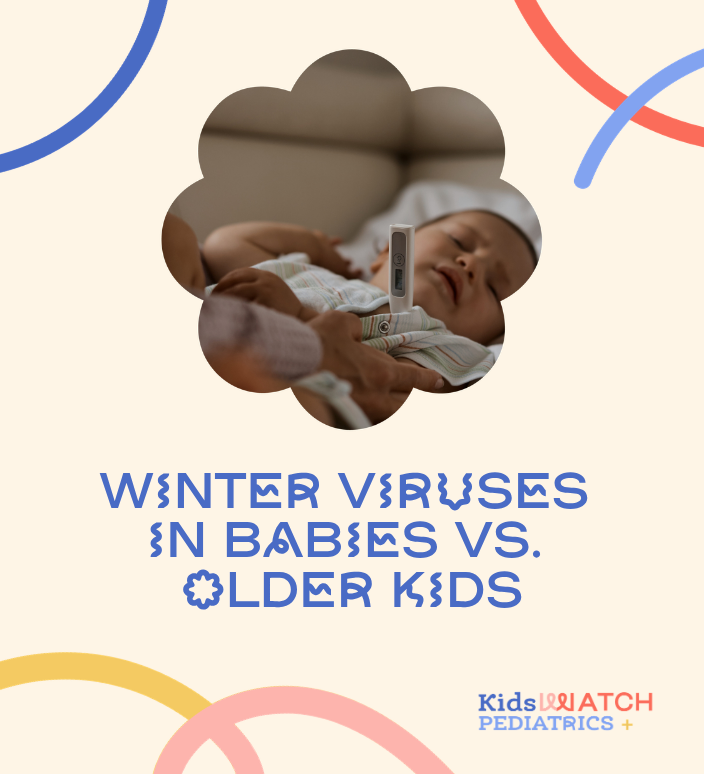
Your baby and your seven-year-old could catch the same virus and show completely different symptoms.
Your older child might complain about a sore throat, headache, or body aches. Meanwhile, your baby may simply refuse a bottle, become unusually fussy, or sleep more than usual.
That’s because illnesses don’t always look the same at every age.
And during winter, when respiratory viruses and stomach bugs become more common, recognizing these differences can help parents make informed decisions about their child’s health.
At KidsWatch Pediatrics in Falls Church, Virginia, we encourage parents to look beyond the typical symptom checklist, especially when caring for infants.
Let’s look at five common winter illnesses and how they may appear in babies versus older children.
1. RSV: A Runny Nose in One Child, Breathing Difficulties in Another
Respiratory syncytial virus, or RSV, is a common respiratory virus that can affect people of all ages.
In older children, RSV often resembles an ordinary cold. In young infants, however, it can sometimes cause more significant breathing problems.
RSV in Babies
Infants may experience:
- Decreased feeding
- Irritability or unusual tiredness
- Runny nose or congestion
- Fast or difficult breathing
- Wheezing
- Pauses in breathing, particularly in very young infants
Some babies with RSV may have little or no fever.
RSV in Older Kids
Older children commonly experience:
- Runny nose
- Coughing and sneezing
- Fever
- Sore throat
- Reduced appetite
- Wheezing in some cases
What parents should remember: A baby with RSV may show changes in feeding or breathing before developing an obvious cough.
Any pauses in breathing, severe breathing difficulty, or blue or gray lips require emergency care.
2. Influenza: Babies Can’t Tell You They Have Body Aches
Influenza, commonly called the flu, can cause more significant illness than an ordinary cold.
In older children, flu symptoms often appear suddenly. Babies, however, may show less specific signs.
Flu in Babies
Watch for:
- Fever, although it may not always be present
- Poor feeding
- Unusual fussiness
- Sleepiness or reduced activity
- Cough and congestion
- Vomiting or diarrhea in some cases
Flu in Older Kids
Symptoms often include:
- Sudden fever or chills
- Headache
- Body aches
- Cough
- Sore throat
- Significant tiredness
- Reduced appetite
What parents should remember: Babies cannot explain that their muscles hurt or that they have a headache. Changes in their usual behavior may be important clues.
Annual influenza vaccination is recommended for most children ages 6 months and older. Some children need two doses during a flu season, depending on their vaccination history.
If your child develops flu symptoms, contact your pediatrician, particularly if your child is younger than 5 years or has an underlying medical condition. Antiviral treatment may be appropriate and works best when started early.
3. Common Cold: Even Mild Congestion Can Disrupt Feeding
The common cold is usually caused by respiratory viruses that affect the nose and throat.
While colds are often mild, congestion can be especially uncomfortable for babies.
Common Cold in Babies
Symptoms may include:
- Stuffy or runny nose
- Sneezing
- Difficulty feeding because of congestion
- Interrupted sleep
- Fussiness
- Mild cough
Common Cold in Older Kids
Older children may experience:
- Runny nose
- Sneezing
- Sore throat
- Mild cough
- Nasal congestion
- Occasional low-grade fever
Many older children can continue eating, drinking, and playing despite cold symptoms.
What parents should remember: Babies rely heavily on nasal breathing during feeding, so even ordinary congestion can make feeding more difficult.
Saline drops and gentle nasal suction may help young babies with congestion.
Avoid giving over-the-counter cough and cold medicines to children younger than 4 unless specifically directed by a healthcare professional. These medicines are generally not recommended for young children.
4. Stomach Bugs: Watch for Dehydration, Especially in Babies
Viral gastroenteritis, commonly called a stomach bug, can cause vomiting and diarrhea.
Although these illnesses can affect children of all ages, infants and young children can become dehydrated more quickly.
Stomach Bugs in Babies
Possible symptoms include:
- Vomiting
- Frequent watery stools
- Reduced feeding
- Fewer wet diapers
- Dry mouth
- Unusual sleepiness or irritability
Stomach Bugs in Older Kids
Symptoms may include:
- Vomiting
- Diarrhea
- Stomach cramps
- Fever
- Reduced appetite
- Tiredness
What parents should remember: For babies, tracking feeding and wet diapers is especially important.
Continue breastfeeding or formula feeding as appropriate, and contact your pediatrician if your baby is struggling to keep feeds down.
Older children may benefit from small, frequent amounts of an oral rehydration solution when vomiting or diarrhea occurs.
Signs of significant dehydration require prompt medical attention.
5. Croup: That Barking Cough Can Sound Different at Every Age
Croup is a respiratory illness involving swelling around the voice box and windpipe. Several viruses can cause it.
It’s most common in young children, particularly between 6 months and 3 years of age.
Croup in Babies
Symptoms may include:
- Barking cough
- Hoarse cry
- Noisy breathing when inhaling
- Increased breathing effort
- Difficulty feeding if breathing becomes harder
Croup in Older Kids
Symptoms may include:
- Distinctive barking cough
- Hoarse voice
- Noisy breathing when inhaling
- Symptoms that become worse at night
What parents should remember: A barking cough can be frightening, but the sound of the cough alone doesn’t determine how serious the illness is.
Pay close attention to your child’s breathing.
Noisy breathing while resting, increased breathing effort, or difficulty swallowing requires urgent assessment. Severe breathing difficulty is an emergency.
What Matters Most When Your Baby Is Sick?
When caring for an infant, don’t rely on fever or cough alone to judge how sick they are.
Instead, pay attention to four important things.
Feeding
Is your baby drinking significantly less breast milk or formula than usual?
Breathing
Are they breathing faster than normal, working harder to breathe, or making unusual breathing sounds?
Alertness
Are they responding normally, or do they seem unusually sleepy, weak, or difficult to wake?
Wet Diapers
Are they having noticeably fewer wet diapers than usual?
These observations can help your pediatrician understand how your baby is doing.
When Should You Seek Medical Care?
Contact your pediatrician promptly if your child has worsening symptoms, difficulty feeding, signs of dehydration, or concerning changes in behavior.
Babies younger than 3 months with a temperature of 100.4°F (38°C) or higher need immediate medical evaluation. Very young babies who appear ill also need prompt assessment even without a fever.
Go to the emergency department or call emergency services for severe breathing difficulty, blue or gray lips, pauses in breathing, or difficulty waking your child.
Same Virus. Different Symptoms. We’re Here to Help.
Winter illnesses can be confusing, especially when symptoms don’t match what you expected.
At KidsWatch Pediatrics, we look at the whole picture, from your child’s symptoms and behavior to their age, medical history, and overall health.
Our pediatric primary care, urgent care, and telemedicine services help families in Falls Church and surrounding Northern Virginia communities access care when they need guidance.
Not sure whether your child’s symptoms need a closer look? Schedule a visit with KidsWatch Pediatrics.
This article is for general educational purposes and is not a substitute for medical advice, diagnosis, or treatment.


Comments will load here
Be the first to comment