


THE
KIDSWATCH
BLOG

Your Baby’s First Winter: 3 Things New Parents Should Know
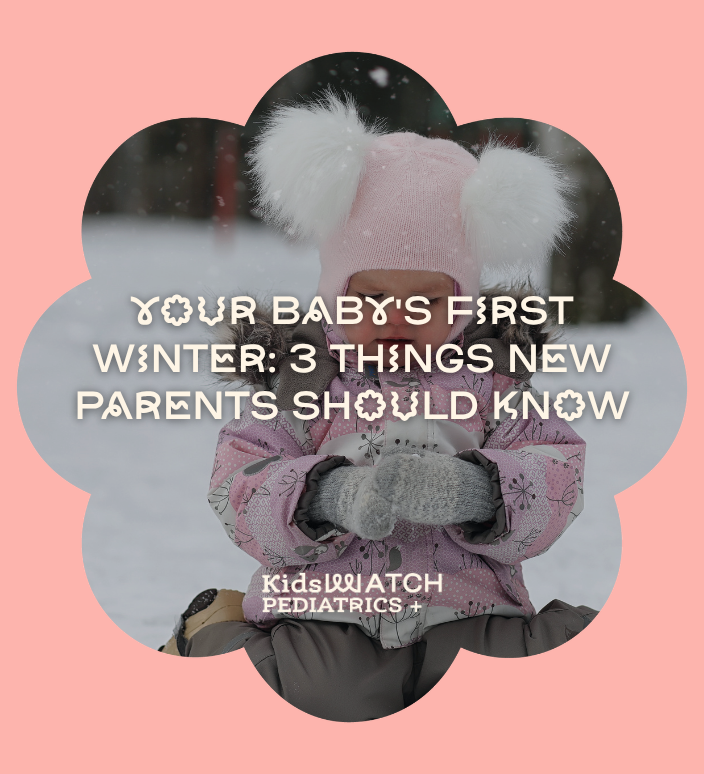
Your baby’s first winter is full of memorable moments. Their first cozy outfits, first holiday gatherings, and maybe even their first snowfall!
But for many new parents, it also brings a whole new set of questions.
Is my baby warm enough? Why is their skin suddenly so dry? Is it okay to ask family members not to kiss or hold my newborn?
If you’ve been wondering about any of these things, you’re certainly not alone.
At KidsWatch Pediatrics in Falls Church, Virginia, we know that your baby’s first winter can feel overwhelming, especially when you’re still learning what’s normal and what deserves a closer look.
Here are three things we want every new parent to know as the colder months arrive.
1. Keeping Your Baby Warm Doesn’t Mean Bundling Them Up All the Time
When temperatures drop, it’s natural to want to wrap your baby in as many warm layers as possible. But babies can become overheated, especially when sleeping.
How should you dress your baby during the day?
A helpful starting point is to dress your baby in one more layer than you’re comfortably wearing in the same environment.
For example, if you’re comfortable in a long-sleeved shirt, your baby may need an additional lightweight layer.
However, the appropriate clothing depends on the temperature, activity, and whether you’re indoors or outdoors.
To check whether your baby is comfortable, feel their chest or the back of their neck rather than relying on their hands and feet. It’s common for babies to have cooler hands and feet even when their body temperature is comfortable.
What about nighttime?
Safe sleep is especially important during winter.
The American Academy of Pediatrics recommends keeping your baby’s sleep space free of loose blankets, pillows, stuffed animals, and other soft objects.
Instead of using loose bedding, consider a properly fitted, non-weighted wearable blanket or sleep sack.
Remember these safe sleep basics:
- Always place your baby on their back for sleep.
- Use a firm, flat sleep surface designed for infants.
- Avoid hats indoors during sleep.
- Avoid weighted sleep sacks, blankets, and swaddles.
- Watch for signs of overheating, such as sweating, flushed skin, or a hot chest.
If you swaddle your newborn, stop as soon as they show signs of attempting to roll over.
KidsWatch Tip: More layers aren’t always better. The goal is to keep your baby comfortably warm without overheating.
2. Winter Can Be Tough on Your Baby’s Skin
Have you noticed your baby’s cheeks becoming rough, their legs looking flaky, or dry patches appearing on their skin?
Cold outdoor air and indoor heating can reduce moisture in the skin, making dryness more noticeable during winter.
Babies have delicate skin, so even small environmental changes may cause irritation.
What can parents do?
Start with a few simple changes to your baby’s skin care routine.
Keep baths short and lukewarm. Hot water and lengthy baths can worsen dryness. Use a gentle, fragrance-free cleanser only where needed.
Moisturize while the skin is still slightly damp. After bathing, gently pat your baby’s skin dry and apply a thick, fragrance-free moisturizer.
Choose creams or ointments over thin lotions. Thicker products generally provide better moisture protection for very dry skin.
Avoid heavily fragranced products. Scented soaps, lotions, and detergents may irritate sensitive skin.
Consider a clean cool-mist humidifier. If indoor air is particularly dry, a humidifier may help maintain a more comfortable environment. Follow cleaning instructions carefully and keep the device out of your baby’s reach.
When Is Dry Skin More Than Just Winter Dryness?
Sometimes, persistent dryness may be a sign of eczema.
Watch for:
- Red, inflamed, or unusually darkened patches
- Persistent rough or scaly skin
- Itching or frequent rubbing
- Cracked, oozing, or irritated areas
- Skin changes that don’t improve with gentle moisturizing
If these symptoms persist, your pediatrician can help determine whether your baby needs additional treatment.
3. You’re Allowed to Set Boundaries During Holiday Gatherings
Your baby’s first holiday season can be exciting for the entire family.
Grandparents want cuddles, relatives want photos, and everyone may be eager to meet the newest family member.
But winter is also a season when respiratory illnesses such as influenza, RSV, and the common cold circulate.
Newborns and young infants can be especially vulnerable to complications from respiratory infections.
And here’s something we want every new parent to hear:
It’s completely okay to set boundaries to protect your baby’s health.
Before holiday gatherings, consider these precautions:
Ask visitors to wash their hands. Anyone holding your baby should wash their hands first.
Encourage sick relatives to visit another time. Someone with a fever, cough, or other symptoms of illness should avoid close contact with your newborn.
It’s okay to say no to kissing your baby. Viruses can spread through close contact, and asking visitors not to kiss your newborn is a reasonable precaution.
You don’t have to pass your baby around. If you’re uncomfortable with multiple people holding your baby, you can politely decline.
Keep up with recommended immunizations. Talk with your pediatrician about vaccines and preventive options appropriate for your baby’s age, including RSV protection and routine childhood vaccinations.
Your pediatrician can also help you understand which vaccinations are recommended for household members and caregivers.
When Should You Call Your Pediatrician?
Babies can’t tell us when something feels wrong, so it’s important to pay attention to changes in their usual behavior.
Contact your pediatrician promptly if your baby is feeding significantly less, has fewer wet diapers, seems unusually sleepy, or develops concerning symptoms.
A temperature of 100.4°F (38°C) or higher in a baby younger than 3 months requires immediate medical evaluation. Do not wait to see whether the fever goes away.
Severe breathing difficulty, blue or gray lips, pauses in breathing, or difficulty waking your baby are emergencies. Seek emergency care immediately.
Your Baby’s First Winter Doesn’t Have to Be a Season of Worry
You don’t need to have every parenting question figured out before your baby’s first winter.
Sometimes, a little guidance can make everyday decisions feel much easier.
At KidsWatch Pediatrics, we support families through newborn care, routine wellness visits, unexpected illnesses, and all the questions that come with raising children.
With pediatric primary care, urgent care, and telemedicine services in Falls Church, Virginia, our team is here to help your family navigate every season.
Have questions about your baby’s health this winter? Schedule a visit with KidsWatch Pediatrics.
This article is for general educational purposes and is not a substitute for medical advice, diagnosis, or treatment.


Comments will load here
Be the first to comment