


THE
KIDSWATCH
BLOG

Ear Pain After a Cold: Could It Be an Ear Infection?
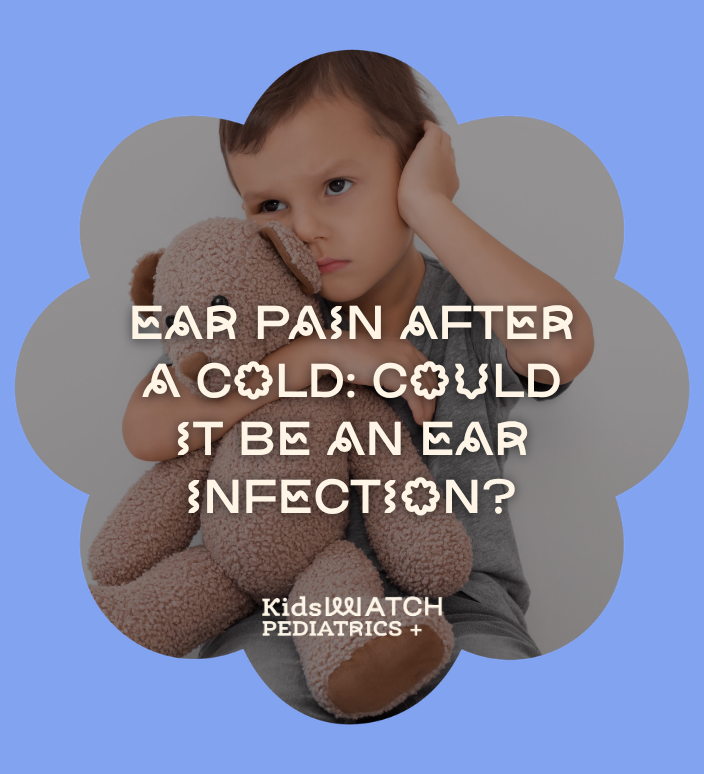
Your child’s runny nose is finally getting better, but now they’re tugging at an ear, waking up at night, or saying their ear hurts. Could that cold have turned into an ear infection?
It’s a common question parents ask, especially during cold and flu season. Ear pain after a respiratory illness can be a sign of a middle ear infection, but not every earache means an infection or requires antibiotics. Here’s what families should know.
Why Can Ear Pain Happen After a Cold?
The middle ear connects to the back of the nose and throat through a small passage called the Eustachian tube. When your child has a cold, swelling and congestion can make it harder for this tube to drain fluid and balance pressure. Fluid may collect behind the eardrum, sometimes leading to an infection.
Young children are especially prone to middle ear infections because their Eustachian tubes are smaller and more horizontal than those of adults.
Signs Your Child Might Have an Ear Infection
Symptoms can vary with age. Look for:
• Ear pain or complaints of pressure in the ear
• Tugging or pulling at an ear, particularly in younger children
• Trouble sleeping or increased fussiness
• Fever
• Temporary difficulty hearing or responding to sounds
• Fluid draining from the ear
Babies and toddlers may not be able to explain where it hurts. Ear pulling alone, however, does not confirm an infection; teething and other causes of discomfort can look similar.
Does Every Ear Infection Need Antibiotics?
No. Some middle ear infections improve on their own. Depending on your child’s age, symptoms, examination findings, and whether one or both ears are affected, a pediatric clinician may recommend close observation for a short period rather than immediate antibiotics.
The only reliable way to determine whether a middle ear infection is present is to examine the eardrum. Your child’s clinician can explain whether antibiotics are appropriate.
How Can You Help Your Child Feel Better at Home?
While you arrange care or follow your clinician’s advice:
• Offer fluids and encourage rest.
• Use an age-appropriate pain reliever such as acetaminophen or ibuprofen when recommended by your clinician. Do not give ibuprofen to infants younger than 6 months unless directed by a clinician.
• Try a warm, not hot, compress against the outside of the ear.
• Avoid putting oils, drops, or other home remedies into the ear unless your child’s clinician recommends them, especially if there is drainage.
Never give aspirin to children or teens unless specifically directed by a clinician.
When Should You Call the Pediatrician?
Arrange an evaluation if your child has significant ear pain, symptoms that are worsening or lasting more than 2–3 days, fever, new hearing concerns, or fluid coming from the ear. Babies younger than 6 months with suspected ear infection symptoms should be evaluated promptly.
Seek urgent medical attention for swelling or redness behind the ear, an ear that appears pushed forward, severe headache, stiff neck, unusual sleepiness, or a child who appears very ill. A baby younger than 3 months with a temperature of 100.4°F (38°C) or higher needs immediate medical evaluation.
Can Ear Infections Be Prevented?
Not every infection is preventable, but everyday habits can help reduce risk. Keep recommended childhood vaccinations up to date, encourage handwashing, avoid tobacco smoke exposure, and practice good respiratory hygiene. Breastfeeding, when possible, may also lower ear infection risk in infants.
We’re Here When Ear Pain Interrupts Your Day
If your little one develops ear pain after a cold, the KidsWatch Pediatrics team can assess their symptoms, examine their ears, and recommend the next step.
KidsWatch Pediatrics offers pediatric primary care and urgent care in Falls Church, Virginia, with walk-ins welcome.
This article is for general educational purposes and is not a substitute for medical advice, diagnosis, or treatment.


Comments will load here
Be the first to comment