


THE
KIDSWATCH
BLOG

Separation Anxiety at School Drop-Off (Tips That Can Make Goodbyes Easier!)
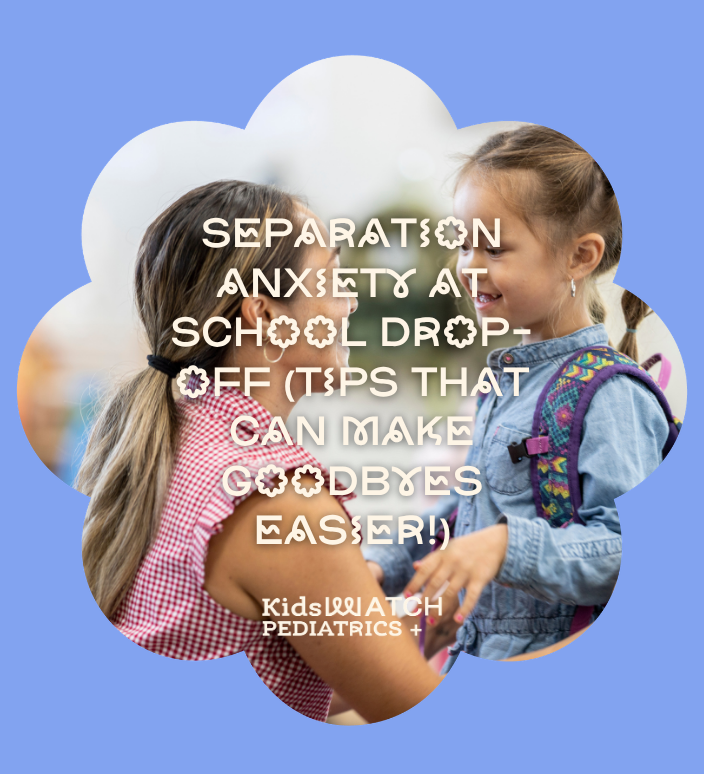
Your child is crying at drop-off. They are holding onto your leg, asking you not to leave, and suddenly you are wondering whether walking away is really the right thing to do.
For many families, separation anxiety becomes especially noticeable at the beginning of a new school or daycare year. Even children who were previously comfortable separating from their parents can struggle when routines, teachers, classrooms, or caregivers change.
The good news is that separation anxiety is common, particularly in younger children, and there are practical ways parents can help make the transition easier.
Why Does My Child Cry at Drop-Off?
Separation anxiety happens when a child becomes distressed about being away from a parent or caregiver.
For babies and toddlers, this can be a normal part of development. Older children may also experience separation anxiety during periods of transition, including starting daycare, preschool, kindergarten, or returning to school after a long break.
Your child may:
→ Cry or cling to you at drop-off
→ Ask repeatedly whether you are coming back
→ Complain of a stomachache or headache before school
→ Have difficulty sleeping before school days
→ Become unusually upset when getting ready in the morning
→ Resist going to school or daycare altogether
Sometimes the hardest part is simply the transition. A child may be very upset while saying goodbye but settle down shortly after their parent leaves.
1. Keep Your Goodbye Short and Predictable
It can be tempting to stay until your child stops crying. But repeatedly extending the goodbye can sometimes make the separation feel even bigger.
Instead, create a simple goodbye routine that your child can learn to expect.
It might be:
A hug.
A kiss.
“I love you. I’ll be back after school.”
Then goodbye.
Try to use the same routine each day. Predictability can help children feel safer because they know exactly what is going to happen next.
2. Never Sneak Away
Leaving while your child is distracted might prevent tears in the moment, but it can make future separations more difficult.
Your child needs to learn an important pattern:
My parent leaves, and my parent comes back.
Say goodbye clearly, reassure them that you will return, and then follow through.
3. Talk About When You Will Return in a Way They Understand
“Mom will be back at 3:30” may not mean much to a three-year-old.
Connect your return to something your child understands instead.
Try:
“I’ll be back after your afternoon snack.”
“Dad will pick you up after story time.”
“I’ll see you when school is finished.”
This gives them a concrete event to associate with your return.
4. Practise Separation Before You Need It
If your child is struggling with being away from you, small opportunities to practise can help.
Start with short, safe separations with a trusted caregiver. As your child becomes more comfortable, gradually increase the amount of time apart.
Each successful separation reinforces the same lesson: you leave, they are safe, and you come back.
5. Let Them Bring a Little Comfort From Home
If their school or daycare allows it, a familiar object may help your child during the transition.
For younger children, this could be a small comfort item. For older children, it might be something as simple as a family photo tucked into their backpack.
Ask your child’s teacher what is appropriate for their classroom.
6. Keep Your Morning Routine Consistent
Children often handle transitions better when the rest of the morning feels predictable.
Try to keep wake-up time, breakfast, getting dressed, leaving home, and drop-off relatively consistent.
Preparing backpacks, clothes, and lunches the night before can also make mornings less rushed, which can help keep stress from building before you even reach school.
7. Acknowledge Their Feelings Without Making the Fear Bigger
You do not have to convince your child that there is absolutely nothing to worry about.
Instead, acknowledge what they are feeling while reminding them that they can handle the separation.
You might say:
“I know saying goodbye feels hard today. Your teacher is here to take care of you, and I’ll come back after school.”
The goal is not necessarily to stop every tear. It is to help your child learn that they can feel sad or nervous and still get through the transition safely.
When Does Separation Anxiety Need More Attention?
Some drop-off tears are common, especially during a new transition. What matters is how intense the anxiety is, how long it continues, and how much it interferes with your child’s everyday life.
Consider talking with your child’s pediatrician if the anxiety is persistent or worsening, or if your child:
→ Regularly refuses to attend school or daycare
→ Has frequent physical complaints related to separation
→ Experiences significant sleep problems or nightmares
→ Has intense distress that does not improve after separation
→ Stops participating in activities they previously enjoyed
→ Has anxiety that is interfering with school, friendships, or family life
A pediatrician can help determine whether your child is experiencing a typical adjustment period or whether additional support may be helpful.
KidsWatch Is Here for More Than Sick Visits
Pediatric care is not only about fevers, coughs, and ear infections.
At KidsWatch Pediatrics, our primary care team can help families navigate development, behavior, emotional wellbeing, school concerns, and the transitions that come with growing up.
And when an unexpected illness or injury happens, our pediatric urgent care services are available too.
Having primary and urgent care in one place means your family has a pediatric team you can turn to for routine care, ongoing concerns, and those unexpected moments when your child needs to be seen sooner.
If separation anxiety is becoming difficult for your child or your family, bring it up at their next well-child visit or schedule an appointment to talk with our team.
KidsWatch Pediatrics
📍 7263 Arlington Blvd, Suite F-1, Falls Church, VA 22042
📞 (703) 775-0777
This article is for educational purposes only and is not a substitute for individualized medical advice.
Comments will load here
Be the first to comment