


THE
KIDSWATCH
BLOG

Constipation in Toddlers: What’s Normal, What’s Not, and When to Come In
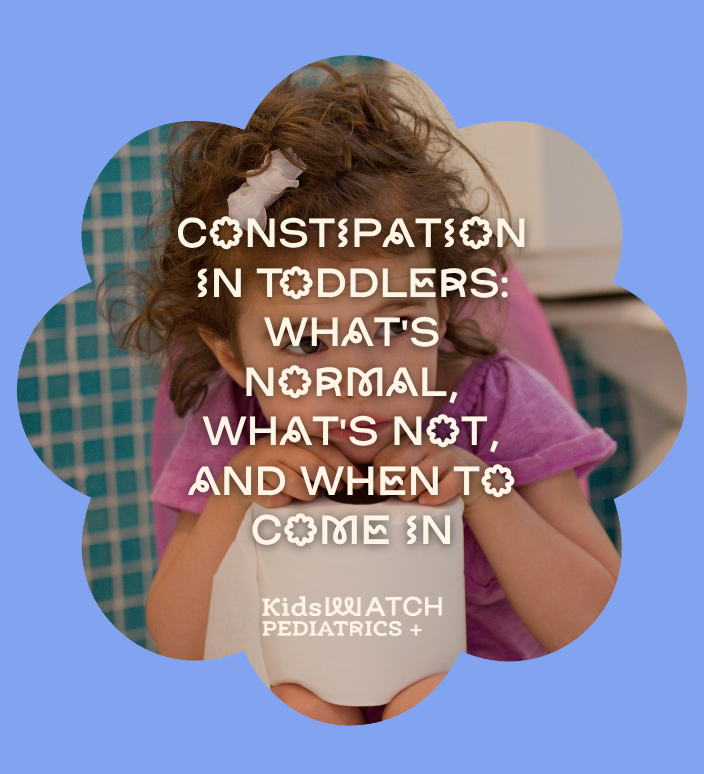
If you have ever found yourself Googling your toddler’s bathroom habits at 9pm, you are in good company. Constipation is one of the most common concerns we hear about at KidsWatch, and one of the most misunderstood.
The good news: most of the time, it is manageable, temporary, and something you can address at home with a few simple changes. Here is what you actually need to know.
What Is Actually Normal for Toddlers?
Before assuming something is wrong, it helps to know what normal looks like at this age. Bowel patterns vary more than most parents realize, and what is normal for one toddler may look very different from another.
| NORMAL STOOL FREQUENCY BY AGE (AAP & PEDIATRIC GUIDELINES) 1 to 2 years old: 1 to 2 soft bowel movements per day is typical. 2 years and older: about 1 soft bowel movement per day. Every 2 to 3 days is still within the normal range as long as stools are soft and passed without pain. Source: American Academy of Pediatrics, Pediatric Constipation Guidelines 2024. |
The key word is soft. Frequency matters less than consistency. A toddler who goes every 3 days and passes a soft, pain-free stool is not constipated. A toddler who goes daily but strains, cries, or passes hard pellet-like stools may be.
Signs Your Toddler Is Constipated
Constipation in toddlers is not just about how often they go. Here is what to look for:
- Stools that are hard, dry, or pellet-shaped
- Straining, crying, or obvious pain when trying to go
- Going fewer than 3 times per week consistently
- A hard, firm belly that does not soften
- Withholding behavior: crossing legs, squeezing buttocks, tip-toeing, avoiding the toilet
- Small streaks of blood on the stool or toilet paper from a small tear
- Soiling in underwear (this can happen when a hard stool blocks the passage and liquid stool leaks around it)
Withholding is worth a specific mention because it is often misread as a behavioral issue. When a toddler has had one painful bowel movement, they may try to avoid going again. The longer they hold it, the harder the stool becomes, and the cycle continues. This is one of the most common patterns we see.
Why Does Constipation Happen in Toddlers?
Diet changes
The most common culprit. Too much dairy, not enough fiber, and not enough water are the top triggers. The transition from pureed foods to solid table foods around 12 to 18 months often causes a shift in stool consistency.
Potty training
Many toddlers experience constipation during or right after potty training. The new environment, the pressure of learning something new, and the unfamiliar sensation of sitting on a toilet can all contribute to withholding.
Not enough fluid
Toddlers who are transitioning from breast milk or formula to cow’s milk and water sometimes do not drink enough. Dehydration is a significant driver of hard stools.
Illness or changes in routine
Fever, travel, starting daycare, a new sibling, or any disruption to routine can temporarily affect bowel habits. This is normal and usually self-resolving.
Holding it
Some toddlers simply do not want to stop playing to use the bathroom. Over time, ignoring the urge to go leads to stools that sit longer in the colon, lose more water, and become harder to pass.
What You Can Do at Home
Increase fiber
Fruits, vegetables, whole grains, and beans all help. The P fruits are especially effective for toddlers: prunes, pears, peaches, and plums. Prune juice diluted with water is often the fastest home fix for mild constipation in toddlers.
Limit: cow’s milk to no more than 16 to 24 ounces per day. Too much dairy is one of the most common dietary causes of toddler constipation.
Push fluids
Water is the priority. Offer it consistently throughout the day, especially if your toddler has recently transitioned away from breast milk or formula.
Encourage movement
Physical activity helps stimulate bowel motility. Time running, jumping, and playing outside is genuinely helpful, not just a nice-to-have.
Establish a bathroom routine
Sitting on the toilet for 5 to 10 minutes after meals takes advantage of the natural gastrocolic reflex that stimulates bowel movement after eating. Make it calm, unhurried, and without pressure.
Warm bath
A warm bath can relax the muscles and make it easier for a constipated toddler to pass a stool. It is worth trying before reaching for any medication.
What Is Not Normal: Red Flags to Watch For
Most toddler constipation resolves with dietary changes and time. But some signs warrant a same-day or urgent evaluation:
| COME IN SOON Constipation that has not improved after 2 weeks of home management Significant abdominal pain or a visibly distended belly Blood in the stool beyond a small streak Vomiting alongside constipation No bowel movement for more than 5 days Weight loss or poor growth alongside bowel changes |
| COME IN NOW / GO TO THE ER Severe abdominal pain that does not improve Vomiting that is persistent and forceful A very swollen and tender bellyYour toddler is in significant distress and not improving You are concerned something is seriously wrong — trust your instincts |
When to Talk to Your Pediatrician
If your toddler has had recurring constipation for more than a few weeks, if dietary changes are not working, or if they are in pain or distress, it is time to come in.
Chronic constipation in toddlers is very treatable, but it often needs a care plan. We can help identify what is driving it, whether it is diet, withholding behavior, potty training anxiety, or something else, and put together a plan that works for your family.
We are open Monday through Friday until 10pm and weekends from 9am to 5pm. Walk-ins are always welcome.

Comments will load here
Be the first to comment