


THE
KIDSWATCH
BLOG

The Spring Symptom Confusion Every NoVa Parent Is Facing Right Now
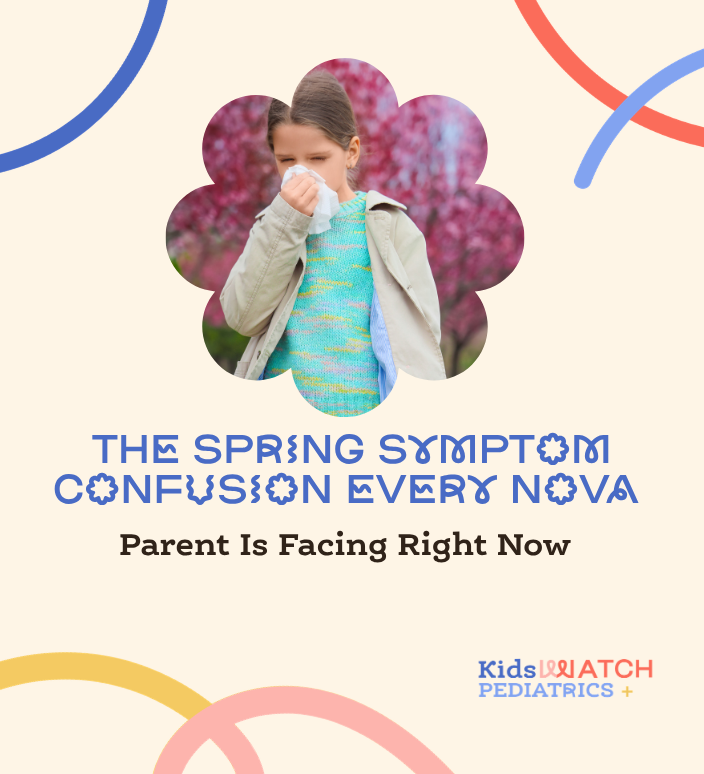
Spring in Northern Virginia brings longer days, blooming trees—and for many families, a wave of allergy symptoms that can be hard to ignore.
If your child has been sneezing more, rubbing their eyes, or dealing with a constant runny nose, you’re not alone. This is one of the most common reasons parents visit us this time of year.But one of the biggest questions we hear is: “Is this just allergies… or something else?”
Why Allergies Are So Common Right Now
In Northern Virginia, spring allergy season is driven by tree pollen, especially from oak, maple, and birch trees. As the season progresses, grass pollen joins in—making symptoms last for weeks, not days.Unlike a cold, allergies don’t come and go quickly. They tend to linger and flare up after outdoor exposure.
Common Allergy Symptoms in Kids
Allergies can look different in every child, but here are the most common signs:
- Frequent sneezing
- Clear, runny nose
- Itchy, watery, or red eyes
- Nasal congestion
- Throat clearing or dry cough
- Symptoms that worsen outside or at night
Many kids otherwise feel completely fine—they’re still playing, eating, and acting like themselves.
Allergies vs. Cold: How to Tell the Difference
This is where it gets tricky.
| Allergies | Cold / Viral Illness |
| No fever | Often includes fever |
| Itchy eyes/nose | Rarely itchy |
| Clear, watery mucus | Can become thick/yellow |
| Lasts weeks | Improves in 7–10 days |
| Worse outdoors | Not tied to environment |
That said—kids can have both at the same time, which is why symptoms can feel confusing or seem to drag on.
When Allergies Can Affect Breathing
For some children, especially those with asthma, spring allergies can trigger:
- Wheezing
- Coughing at night
- Shortness of breath
If your child has a history of asthma or breathing issues, allergy season can make symptoms worse.
When to Get Your Child Checked
It’s worth getting evaluated if:
- Symptoms last more than 1–2 weeks
- Your child isn’t sleeping well due to congestion or cough
- Over-the-counter medications aren’t helping
- You’re not sure if it’s allergies or something else
- There are any breathing concerns
Getting clarity early can help prevent symptoms from getting worse—and make your child more comfortable faster.
How KidsWatch Can Help
At KidsWatch, we care for kids through both primary care and urgent care, so you don’t have to guess where to go.
We help:
- Confirm whether it’s allergies, a cold, or something else
- Recommend age-appropriate treatments
- Monitor patterns over time—not just treat one visit
And if you’re not ready to come in, you can also start with a telehealth visit from home.
Spring allergies are common—but that doesn’t mean you have to guess your way through them.
If something feels off, or symptoms aren’t improving, it’s always okay to get a second look.
📍 KidsWatch Pediatrics – Primary + Urgent Care
7263 Arlington Blvd, Suite F, Falls Church, VA
📞 (703) 775-0777
Comments will load here
Be the first to comment